Return to all News

New Study on a Master Regulator in Toxoplasma Infection Now Out

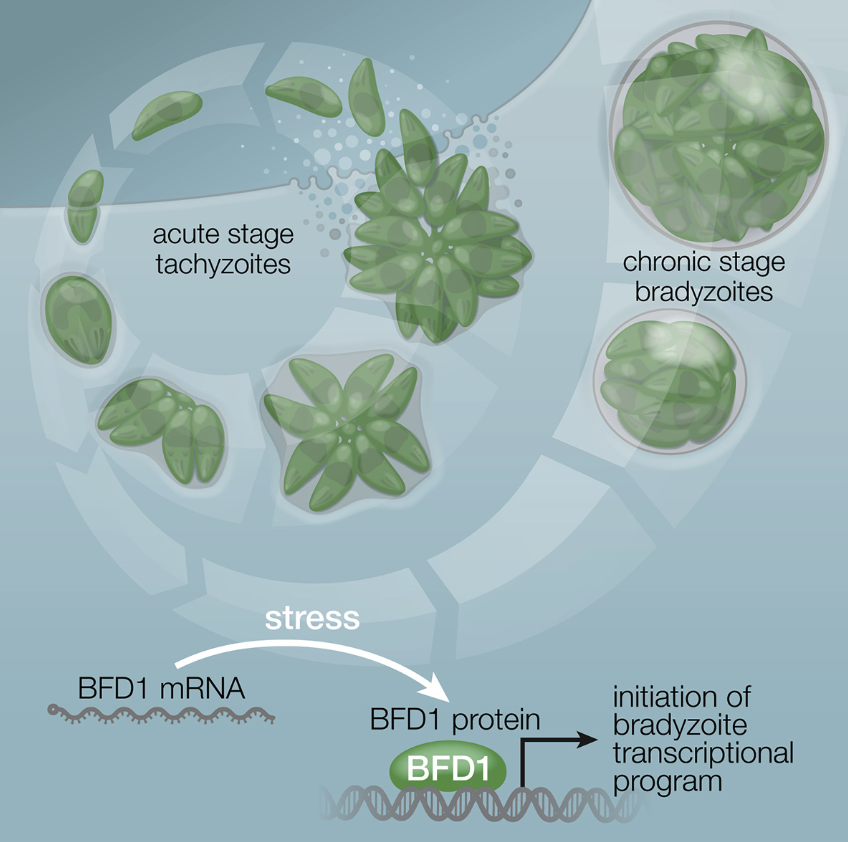
Toxoplasma tachyzoite to bradyzoite stage conversion

This MIT News article describes research uncovering the genetic “switch” that allows the parasite Toxoplasma gondii to transition from an acute, rapidly replicating infection to a chronic, latent state that can persist for life. The study identifies a single gene, Bradyzoite-Formation Deficient 1 (BFD1), as both necessary and sufficient to drive this transformation into the protective bradyzoite stage, resolving a long-standing question about how chronic infection is established. By pinpointing this master regulator, the work provides a powerful handle for experimentally controlling parasite differentiation and suggests new therapeutic strategies—specifically, preventing the switch could keep the parasite vulnerable to immune clearance and drug treatment. For the Shalek Lab context, this research aligns with broader efforts to dissect host–pathogen dynamics and cellular state transitions at high resolution, offering a complementary model for understanding how infections persist.
Read press releases about the study here.

TB Vaccine Efficacy Study Previewed in Cell New Study on Increased TB Vaccine Efficacy Now Out